
 English
 عربى
عربى
Wholesale Square Sound-Absorbing Panels


Square Sound-Absorbing Panels Manufacturers
-
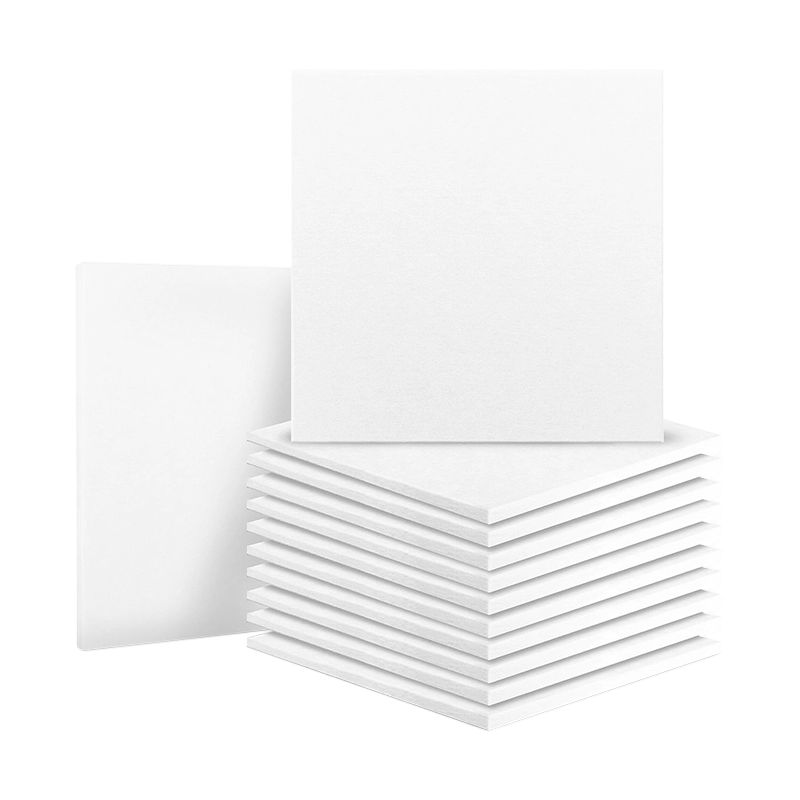

Modern Design Recycled Polyester Fiber Acoustic Panel
-
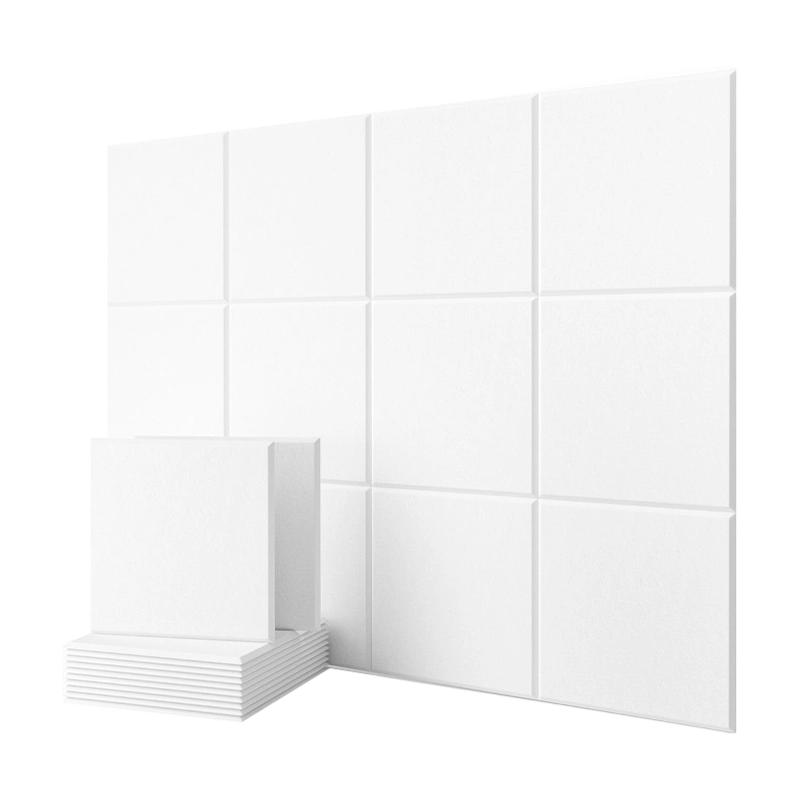
Eco-Friendly PET Polyester Fiber Acoustic Panel
Square acoustic panels represent the workhorse format of polyester fiber sound treatment. Precision cut to consistent dimensions, they are ideal for systematic wall coverage and ceiling grid installations where regularity and efficiency matter most.
The panels deliver reliable NRC performance for broadband noise reduction in standard commercial environments including open offices, conference rooms, classrooms, and corridors. Their uniform format simplifies layout planning, material estimation, and on-site installation, reducing project labor costs.
Available in a wide range of standard thicknesses and colors, with bulk and OEM orders accepted.
Changshu Chiheng Decorative Materials Co., Ltd.
We are a professional manufacturer specializing in polyester fiber acoustic materials, dedicated to providing effective, safe, and sustainable sound control solutions for architectural and interior spaces.
With a modern production base covering 20,000 square meters, as Square Sound-Absorbing Panels Suppliers in China, we focus on the development and manufacturing of polyester fiber acoustic panels and sound-absorbing materials, offering over 2 product series and more than 1,000 models to meet diverse project requirements worldwide.
- Factory Area
20000㎡
- Annual production capacity
1000000+
- Annual Export Ratio
90%
- Product Model
1000$

Core Production & Quality Control
Our 20,000 m² modern manufacturing facility specializes in polyester fiber acoustic panels and acoustic insulation materials. We are Square Sound-Absorbing Panels Manufacturers in China, Supply Square Sound-Absorbing Panels Wholesale. We use high-quality polyester fibers, ensuring purity, consistency, and long-term stability from the source. Production and testing are carried out in accordance with international standards, with close attention to acoustic performance, safety, and environmental indicators.
News
-
Two tone sound-absorbing panels combine acoustic performance with distinctive visual design, offering a way to control noise while making a deliberate...
View More -
Self-adhesive fiber acoustic panels have simplified the process of soundproofing and noise control for homeowners, renters, and businesses alike. Unli...
View More -
Polyester fiber acoustic panels have become one of the most practical solutions for controlling noise and improving sound quality in both residential ...
View More
Industry knowledge
Why Module Size Matters More Than Most Buyers Realize
Square panels are the most common acoustic module used in commercial interiors, largely because a square grid tiles cleanly across a ceiling or wall without the layout gaps and cut-piece waste that come with irregular or rectangular formats. What is less obvious is that the actual side dimension chosen — 300mm, 600mm, 1200mm being the most common increments — has a measurable effect on both installation efficiency and the panel's edge-driven absorption behavior. Smaller modules, such as 300mm or 600mm squares, expose more total edge length per square meter of coverage than a single large 1200mm panel covering the same area. Since edges are where a porous absorber like polyester fiber interacts most actively with sound waves arriving at oblique angles, a wall built from smaller square units can, in practice, show a slightly higher effective absorption than the same area covered by fewer large panels, even when both use identical core material. This is a detail worth raising with a supplier during specification, because module size is often selected purely for visual grid rhythm without considering this secondary acoustic effect.
Common Square Module Sizes and Where They Fit
| Module Size | Installation Speed | Typical Setting |
| 300mm x 300mm | Slower, more units to place | Small rooms, patterned feature walls |
| 600mm x 600mm | Moderate, matches standard ceiling grid | Offices, classrooms, corridors |
| 1200mm x 1200mm | Faster, fewer seams | Large halls, warehouses, gymnasiums |
| Custom oversized squares | Fastest per area, higher handling care | Auditoriums, atriums, feature ceilings |
Grid Layout Strategy: Aligned, Staggered, or Offset Patterns
Once a square panel size is chosen, the layout pattern on the wall or ceiling becomes its own design decision with acoustic implications beyond appearance. A fully aligned grid, where every panel lines up with its neighbors in both directions, is the fastest to install and the easiest to plan around fixed obstacles like light fixtures or sprinkler heads. A staggered or brick-bond layout, where alternating rows are offset by half a module width, distributes seam lines more evenly across the surface and can slightly reduce the visual impact of any minor color variation between production batches. An offset pattern with intentional gaps between panels — sometimes called a floating or cluster layout — reduces total material coverage and cost while still targeting the specific zones of a room where reflections are most problematic, such as directly above a conference table or behind a lecture podium. Selecting between these approaches typically depends on whether the priority is maximum coverage for reverberation control or a more selective, budget-conscious treatment of known problem areas.
Practical Layout Planning Steps
- Map the room's fixed ceiling elements first, then choose a module size that minimizes the number of panels requiring on-site cutting around vents, sprinklers, or light fixtures.
- Calculate coverage percentage based on the room's reverberation time target rather than covering the entire surface by default, since over-treating a space can create an acoustically dead, uncomfortable environment.
- Account for expansion gaps between panels in climates with significant humidity swings, since polyester fiber panels can expand or contract slightly with moisture absorption over time.
- Order panels from the same production batch for a single project whenever possible, as slight color or texture variation between batches becomes more visible on large, uniform square-grid installations than on mixed-shape designs.
Edge Treatment Options for Square Panels
The edge profile of a square panel affects how visible the seams are once panels are installed side by side, which matters more for square modules than for isolated feature shapes because square panels are almost always installed in repeating grids where every seam is visible at once. A square-cut edge produces a tight, near-invisible seam when panels are pressed close together, which suits a minimalist look where the wall or ceiling should read as a continuous surface. A beveled edge intentionally creates a visible V-groove at every seam, turning the grid itself into a design feature rather than something to hide. A radius or rounded edge softens the transition between panels and is often chosen for spaces with a lot of foot traffic near the panels, since rounded edges are somewhat more resistant to chipping from incidental contact than sharp square-cut corners. Changshu Chiheng Square Sound-Absorbing Panels are available with all three edge treatments across the majority of our polyester fiber panel series, which lets a single project specify a consistent edge profile across ceiling, wall, and column-wrap applications rather than mixing finishes from different suppliers.
Mounting Method Comparison for Square Formats
Because square panels are almost always installed in repeated grids, the mounting system chosen has a large impact on both labor cost and long-term maintainability. The table below compares the three most common approaches used across commercial projects.
| Mounting Method | Reworkable | Best For |
| Direct adhesive | No | Low-budget, permanent installs |
| Z-clip or batten frame | Yes, panel by panel | Offices, schools, retrofit projects |
| Suspended grid system | Yes, full flexibility | Large ceilings, spaces needing access above panels |
Where Square Panels Are the Practical Choice Over Custom Shapes
While curved or special-shaped panels attract more attention in design presentations, square panels remain the default recommendation for most functional acoustic treatment projects, and for good reason. Their standardized dimensions make it possible to calculate exact material quantities before ordering, which reduces both waste and the risk of running short mid-installation. They are also the easiest format to replace individually if a single panel is damaged years after installation, since a matching square module can be sourced and swapped without disturbing the surrounding grid — something far more difficult with a custom or interlocking special shape. For facilities managers responsible for long-term maintenance of large spaces like schools, hospitals, or office campuses, this replaceability is often a bigger practical consideration than the initial visual impression of the panel format.
Changshu Chiheng Decorative Materials Co., Ltd. produces square sound-absorbing panels as one of the core formats within our broader polyester fiber acoustic product range, manufactured from a 20,000-square-meter production base with more than 1,000 models available to match different density, thickness, edge, and finish requirements. For project teams comparing square panel options, the most useful next step is usually to confirm the target reverberation time for the space first, then work backward to the module size, coverage percentage, and mounting method that will achieve it, rather than starting from a preferred panel size and hoping the acoustic result follows. Suppliers who can support that calculation directly — rather than simply quoting a price per square meter of Changshu Chiheng Square Sound-Absorbing Panels — tend to deliver installations that perform closer to the room's actual acoustic target once furniture, people, and finishes are in place.
-
QUICK
Home Products About Projects News Contact -
Product Categories
Polyester Fiber Acoustic Panels Custom Acoustic Panels Self-Adhesive Acoustic Solutions Composite Sound Absorber Acoustic Accessory & Whole Solutions Square Sound-Absorbing Panels -
Contact
 cwl13092627852@163.com
  +86-13092627852 +8613913783502
 No. 6 Youpin North Road, Zhitang Town, Changshu City, Suzhou, Jiangsu Province, China
Let’S Co-Create A High-Quality Future For Decorative materials.
We are committed to providing you with cutting-edge design, more efficient delivery, and more stable quality solutions,Meet your material needs.
Copyright © 2026 by Changshu Chiheng Decorative Materials Co., Ltd. Rights Reserved.
