
 English
 عربى
عربى
Wholesale Laminated Acoustic Panel


Laminated Acoustic Panel Manufacturers
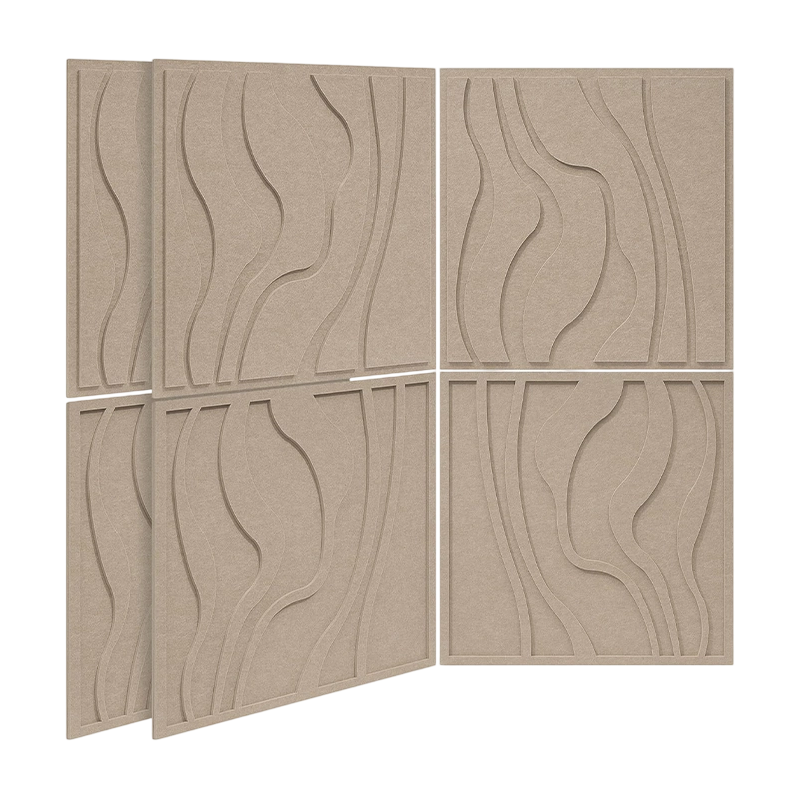

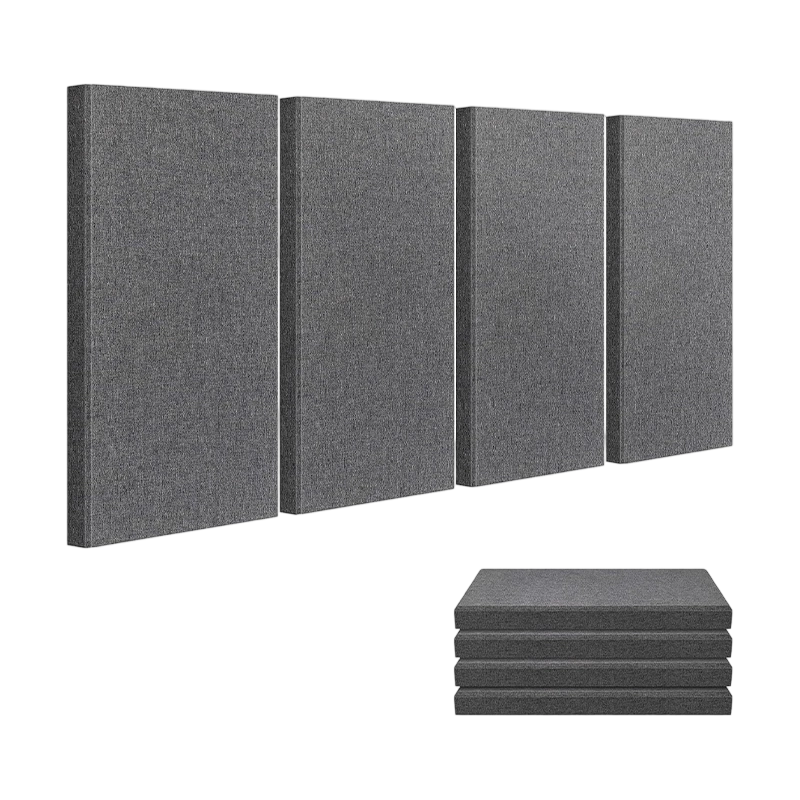
Laminated acoustic panels are formed by thermally bonding and adhesive-pressing multiple functional material layers into a single unified panel. The lamination process increases structural rigidity compared to single-layer polyester panels while maintaining the core broadband sound-absorption characteristics of the base material.
This construction suits applications requiring panels to span larger unsupported areas, resist deformation under varying humidity conditions, or carry additional surface materials such as fabric, veneer, or printed film. The result is a versatile acoustic substrate that can be finished to a wide range of aesthetic specifications.
Standard and custom layer configurations, dimensions, and surface finishes are available for project and OEM orders.
Changshu Chiheng Decorative Materials Co., Ltd.
We are a professional manufacturer specializing in polyester fiber acoustic materials, dedicated to providing effective, safe, and sustainable sound control solutions for architectural and interior spaces.
With a modern production base covering 20,000 square meters, as Laminated Acoustic Panel Suppliers in China, we focus on the development and manufacturing of polyester fiber acoustic panels and sound-absorbing materials, offering over 2 product series and more than 1,000 models to meet diverse project requirements worldwide.
- Factory Area
20000㎡
- Annual production capacity
1000000+
- Annual Export Ratio
90%
- Product Model
1000$

Core Production & Quality Control
Our 20,000 m² modern manufacturing facility specializes in polyester fiber acoustic panels and acoustic insulation materials. We are Laminated Acoustic Panel Manufacturers in China, Supply Laminated Acoustic Panel Wholesale. We use high-quality polyester fibers, ensuring purity, consistency, and long-term stability from the source. Production and testing are carried out in accordance with international standards, with close attention to acoustic performance, safety, and environmental indicators.
News
-
Two tone sound-absorbing panels combine acoustic performance with distinctive visual design, offering a way to control noise while making a deliberate...
View More -
Self-adhesive fiber acoustic panels have simplified the process of soundproofing and noise control for homeowners, renters, and businesses alike. Unli...
View More -
Polyester fiber acoustic panels have become one of the most practical solutions for controlling noise and improving sound quality in both residential ...
View More
Industry knowledge
What Lamination Actually Changes at the Material Level
Lamination, in the context of acoustic panels, refers to permanently bonding a facing material — fabric, film, veneer, melamine, or metal foil — directly onto the polyester fiber core using heat, pressure, or adhesive film, rather than mechanically wrapping or stapling the facing onto the panel edges. This distinction matters more than it might first appear, because a laminated bond changes the panel's surface behavior in ways a loosely applied facing does not. A properly laminated facing becomes structurally continuous with the fiber core, meaning the two layers expand and contract together under humidity and temperature changes rather than shifting independently, which significantly reduces the risk of bubbling, wrinkling, or delamination at the edges over years of service. It also changes cleaning behavior — a laminated melamine or film facing creates a continuous, wipeable surface, whereas a stretched fabric facing remains porous and requires different maintenance. Changshu Chiheng produces our Laminated Acoustic Panel line using a hot-press lamination process specifically because this bonding method has proven more durable in field conditions than adhesive-only lamination, particularly in commercial spaces with regular cleaning cycles or fluctuating indoor climate.
Lamination Methods Compared
| Method | Bond Durability | Common Facing Types |
| Hot-press thermal lamination | High, fused under heat and pressure | Melamine, film, veneer |
| Adhesive film lamination | Moderate, dependent on adhesive quality | Fabric, thin foil, printed film |
| Spray or roller adhesive | Lower, more prone to edge lift over time | Lightweight fabric, temporary applications |
Does Lamination Reduce Sound Absorption, and by How Much?
This is the most common technical question raised when a laminated facing is proposed over a raw fiber panel, and the answer depends heavily on the facing material's own porosity. A laminated fabric facing that is itself acoustically transparent — meaning it allows air and sound waves to pass through its weave with minimal resistance — has only a small effect on the panel's overall NRC, often reducing it by less than 0.05 across the tested range. A laminated melamine or solid film facing, by contrast, is inherently non-porous and will noticeably reduce high-frequency absorption because it blocks the surface entry point that porous absorption depends on, even though the fiber core behind it remains structurally identical. This is not a flaw in the laminated product; it is a predictable trade-off that should be factored into product selection based on the room's actual requirements. A meeting room prioritizing wipeable, durable walls over maximum absorption may accept the reduced NRC of a laminated melamine facing, while a recording studio or auditorium chasing maximum speech clarity would be better served by a porous fabric-laminated option instead.
Matching Facing Porosity to Room Priority
- Prioritize maximum absorption: choose a laminated open-weave fabric facing over a fiber core, which preserves most of the base material's NRC rating.
- Prioritize cleanability and durability: choose a laminated melamine or film facing, accepting a moderate reduction in high-frequency absorption in exchange for a wipeable, stain-resistant surface.
- Prioritize a balance of both: request the specific tested NRC of the laminated assembly rather than the raw core, and compare that figure directly against the room's target reverberation time.
- For spaces requiring both durability and strong absorption, consider a laminated facing only on high-contact lower wall sections, leaving upper wall or ceiling areas in a more porous, unlaminated finish.
Edge Sealing: The Detail That Determines How Long a Laminated Panel Lasts
A laminated facing that is perfectly bonded across the panel face can still fail prematurely if the panel edges are not properly sealed during manufacturing, since the cut edge of a fiber board is the most vulnerable point for moisture ingress, edge lifting, and fraying under repeated handling. Panels intended for humid environments — coastal buildings, poorly ventilated basements, or spaces near commercial kitchens — benefit significantly from an edge-banding or edge-sealing process that wraps the lamination slightly around the panel's cut edge rather than stopping flush at the surface. Without this treatment, moisture entering through an exposed edge can gradually work its way beneath the laminated facing over months or years, eventually causing a visible bubble or lift line that starts at the corner or edge and spreads inward. This failure mode is rarely visible at the time of installation and only becomes apparent well into a project's service life, which is why asking a supplier specifically about their edge treatment process is a more useful due-diligence question than simply confirming the facing material itself.
Changshu Chiheng Laminated Acoustic Panel products are manufactured with edge-sealing as a standard step across our production process rather than an optional upgrade, reflecting the company's broader focus on long-term field performance rather than only initial appearance. Operating from a 20,000-square-meter production base with more than 1,000 models available across our polyester fiber acoustic product lines, Changshu Chiheng Decorative Materials Co., Ltd. supports project teams in selecting the lamination method, facing porosity, and edge treatment that match both the acoustic target and the environmental conditions of a specific installation, rather than treating lamination as a single fixed specification applied uniformly across every project.
-
QUICK
Home Products About Projects News Contact -
Product Categories
Polyester Fiber Acoustic Panels Custom Acoustic Panels Self-Adhesive Acoustic Solutions Composite Sound Absorber Acoustic Accessory & Whole Solutions Laminated Acoustic Panel -
Contact
 cwl13092627852@163.com
  +86-13092627852 +8613913783502
 No. 6 Youpin North Road, Zhitang Town, Changshu City, Suzhou, Jiangsu Province, China
Let’S Co-Create A High-Quality Future For Decorative materials.
We are committed to providing you with cutting-edge design, more efficient delivery, and more stable quality solutions,Meet your material needs.
Copyright © 2026 by Changshu Chiheng Decorative Materials Co., Ltd. Rights Reserved.
