
 English
 عربى
عربى
Wholesale Acoustic Installation Accessories


Acoustic Installation Accessories Manufacturers
-
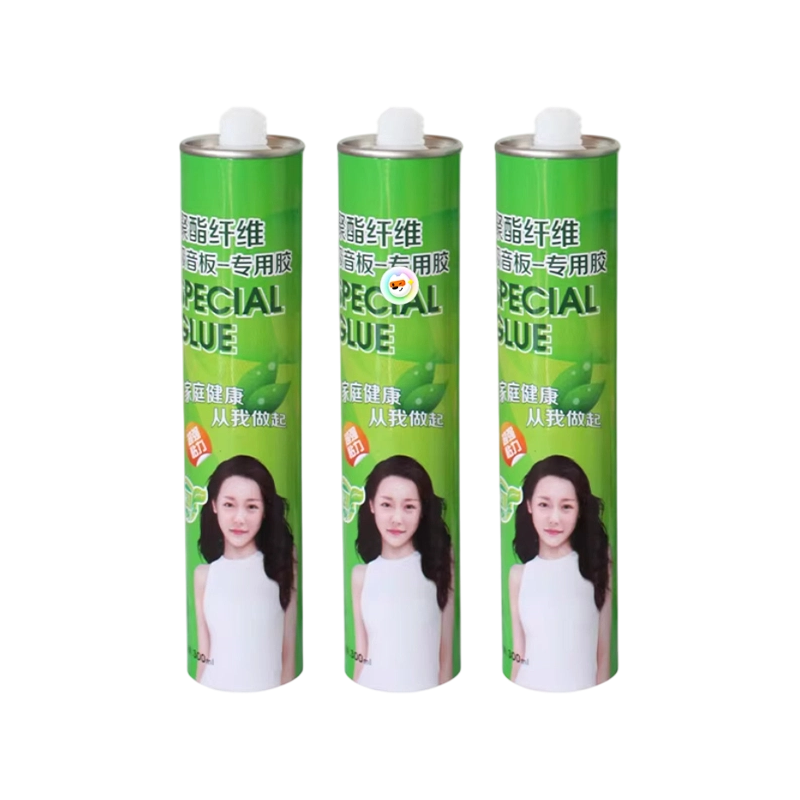

Eco-Friendly Special Adhesive Glue for Polyester Fiber Acoustic Panels
-
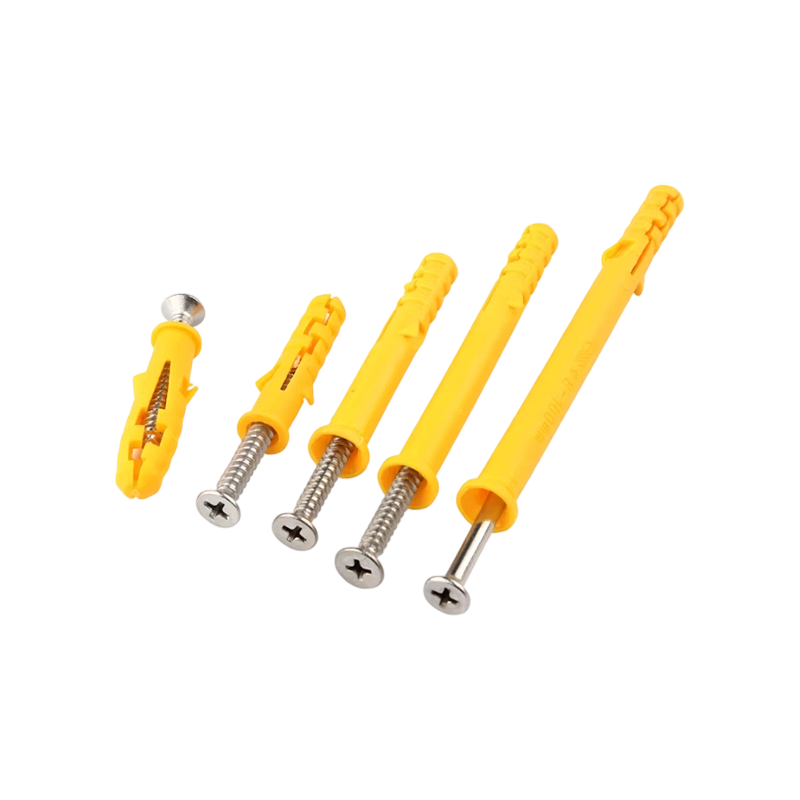
Yellow Wall Expansion Anchor & Screw Set for Acoustic Panel Mounting
Acoustic installation trim profiles and edging accessories are engineered specifically for use at panel borders, wall junctions, and ceiling perimeters where raw panel edges would otherwise be exposed. The profiles provide a structured closure that protects panel edges from impact and wear while delivering a precise, architectural finish line that defines the boundary of the acoustic treatment.
The trim system is compatible with standard polyester fiber panel thicknesses and can be adapted to wall-to-ceiling transitions, inside corners, and outside corners. Installation requires no specialist tools and integrates cleanly with standard interior finishing workflows.
Profiles are available in standard lengths and color options matched to common panel colors. Custom color and cross-section profiles can be manufactured for project-specific requirements.
Changshu Chiheng Decorative Materials Co., Ltd.
We are a professional manufacturer specializing in polyester fiber acoustic materials, dedicated to providing effective, safe, and sustainable sound control solutions for architectural and interior spaces.
With a modern production base covering 20,000 square meters, as Acoustic Installation Accessories Suppliers in China, we focus on the development and manufacturing of polyester fiber acoustic panels and sound-absorbing materials, offering over 2 product series and more than 1,000 models to meet diverse project requirements worldwide.
- Factory Area
20000㎡
- Annual production capacity
1000000+
- Annual Export Ratio
90%
- Product Model
1000$

Core Production & Quality Control
Our 20,000 m² modern manufacturing facility specializes in polyester fiber acoustic panels and acoustic insulation materials. We are Acoustic Installation Accessories Manufacturers in China, Supply Acoustic Installation Accessories Wholesale. We use high-quality polyester fibers, ensuring purity, consistency, and long-term stability from the source. Production and testing are carried out in accordance with international standards, with close attention to acoustic performance, safety, and environmental indicators.
News
-
Two tone sound-absorbing panels combine acoustic performance with distinctive visual design, offering a way to control noise while making a deliberate...
View More -
Self-adhesive fiber acoustic panels have simplified the process of soundproofing and noise control for homeowners, renters, and businesses alike. Unli...
View More -
Polyester fiber acoustic panels have become one of the most practical solutions for controlling noise and improving sound quality in both residential ...
View More
Industry knowledge
Choosing Between Adhesive and Mechanical Fixing: A Decision Based on Load, Not Preference
One of the most consequential decisions in any acoustic panel installation happens before a single panel is placed on the wall — whether to rely on adhesive bonding or mechanical fixing with anchors and screws. This decision should be driven primarily by panel weight, wall substrate, and expected service life, not by which method happens to be faster or more familiar to the installation crew. Adhesive bonding using a purpose-built glue offers a clean, hardware-free finish and works well for lighter panels on stable, well-prepared wall surfaces, but it depends entirely on surface preparation and cure time to reach full strength. Mechanical fixing with expansion anchors and screws bypasses the surface entirely, anchoring into the structural substrate behind drywall or masonry, which makes it the more reliable choice for heavier panels, ceiling installations, or any application where long-term structural certainty matters more than a completely invisible mounting method. Changshu Chiheng Acoustic Installation Accessories are supplied as a matched system specifically so that installers are not left guessing which combination of glue or anchor is appropriate for a given panel weight and wall type.
Adhesive Versus Mechanical Fixing at a Glance
| Factor | Adhesive Bonding | Mechanical Fixing |
| Best panel weight | Light to moderate | Moderate to heavy |
| Finished appearance | Hardware-free, seamless | Visible or concealed fasteners |
| Wall dependency | Requires clean, stable surface | Anchors into structural substrate |
| Ceiling suitability | Not recommended for most panels | Preferred method |
What "Eco-Friendly" Actually Means in an Acoustic Panel Adhesive
The term eco-friendly gets applied loosely to construction adhesives, so it is worth understanding what it actually refers to in this context rather than treating it as a marketing label. For an adhesive bonding polyester fiber panels, the relevant factors are typically low or zero volatile organic compound (VOC) content, water-based rather than solvent-based formulation, and the absence of formaldehyde or other compounds that can off-gas into occupied indoor spaces after curing. This matters practically, not just environmentally, because indoor air quality regulations in schools, healthcare facilities, and increasingly in general commercial construction now require documentation of VOC emissions for interior finish materials, including the adhesives used to install them. A solvent-heavy adhesive can also carry a stronger odor during and after installation, which is a genuine concern in occupied buildings where installation happens around normal working hours rather than during a full building shutdown. The Eco-Friendly Special Adhesive Glue for Polyester Fiber Acoustic Panels developed for Changshu Chiheng panel systems is formulated as a water-based, low-VOC product specifically because our panels are frequently installed in occupied schools, offices, and healthcare interiors where indoor air quality during and after installation is a genuine project requirement, not an optional preference.
Practical Application Notes for Water-Based Panel Adhesive
- Apply in a consistent bead pattern across the panel back rather than only at the corners, since water-based adhesives generally need broader contact area than solvent-based alternatives to achieve equivalent hold.
- Allow for a longer open time before final panel placement compared to solvent-based products, since water-based formulations cure through evaporation rather than chemical reaction and are more sensitive to ambient humidity.
- Maintain adequate room ventilation during the curing period even though VOC emissions are low, since moisture from the adhesive itself needs to evaporate for the bond to reach full strength.
- Avoid installation in near-freezing temperatures, as water-based adhesives can fail to cure properly and lose bonding strength if applied below the manufacturer's minimum recommended temperature.
Anchor Selection: Why Wall Type Determines the Right Hardware, Not Panel Size Alone
Expansion anchors are often selected based purely on the panel's weight, but the wall substrate the anchor is being driven into is just as important a variable, since the same anchor that holds securely in solid concrete may fail in hollow drywall without additional reinforcement. Hollow-wall anchors are designed to expand or toggle behind a thin drywall surface, distributing load across a wider area than the screw alone could achieve in the thin material, and are appropriate for standard interior partition walls. Masonry or concrete anchors rely on friction and expansion directly within a solid, dense substrate and generally offer higher pull-out resistance, making them preferable for heavier panels or ceiling installations where any hardware failure carries a higher safety risk. Installers who use a concrete-rated anchor in hollow drywall, or a lightweight hollow-wall anchor in a load-bearing ceiling application, are likely to see hardware failure regardless of how well the panel itself was manufactured, which is why anchor selection deserves the same attention as panel selection rather than being treated as an interchangeable commodity item.
The Yellow Wall Expansion Anchor & Screw Set for Acoustic Panel Mounting supplied within the Changshu Chiheng accessories range is sized and rated specifically for the weight profile of our polyester fiber panel products, giving installers a pre-matched hardware option rather than requiring a separate hardware supplier calculation for every project. Manufactured from a 20,000-square-meter production base with more than 1,000 models available across our polyester fiber acoustic product lines, Changshu Chiheng Decorative Materials Co., Ltd. develops our full range of Acoustic Installation Accessories, from adhesive to anchoring hardware, to work as a coordinated system so that the panel, the adhesive or fixing method, and the wall condition are addressed together rather than as separate purchasing decisions made without reference to one another.
-
QUICK
Home Products About Projects News Contact -
Product Categories
Polyester Fiber Acoustic Panels Custom Acoustic Panels Self-Adhesive Acoustic Solutions Composite Sound Absorber Acoustic Accessory & Whole Solutions Acoustic Installation Accessories -
Contact
 cwl13092627852@163.com
  +86-13092627852 +8613913783502
 No. 6 Youpin North Road, Zhitang Town, Changshu City, Suzhou, Jiangsu Province, China
Let’S Co-Create A High-Quality Future For Decorative materials.
We are committed to providing you with cutting-edge design, more efficient delivery, and more stable quality solutions,Meet your material needs.
Copyright © 2026 by Changshu Chiheng Decorative Materials Co., Ltd. Rights Reserved.
