
 English
 عربى
عربى
Grooved Acoustic Panel Custom


Grooved Acoustic Panel Manufacturers
-
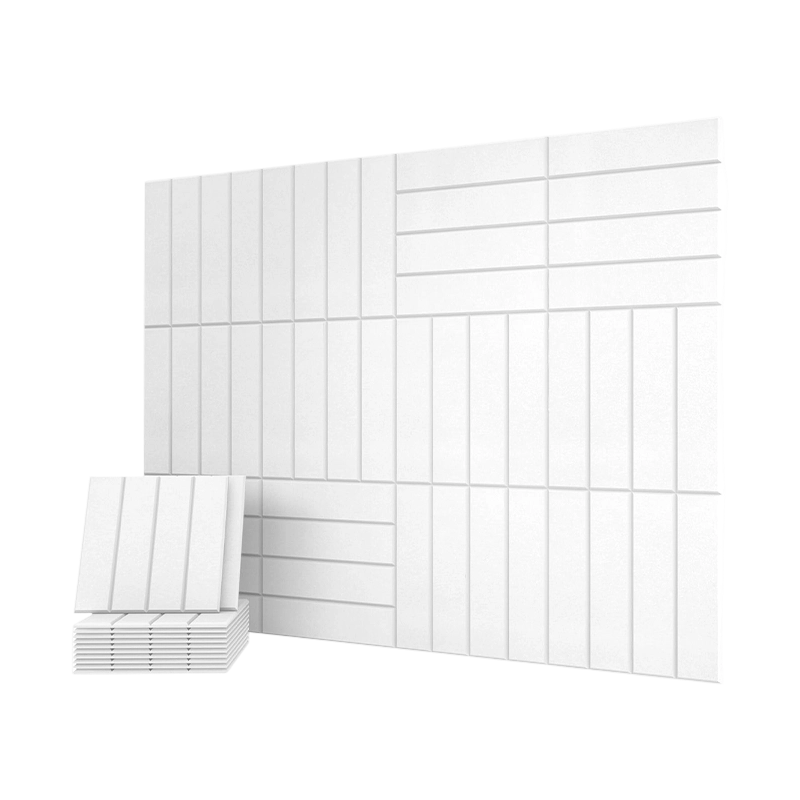

Straight-Groove Indoor Wall Polyester Fiber Acoustic Panel
-
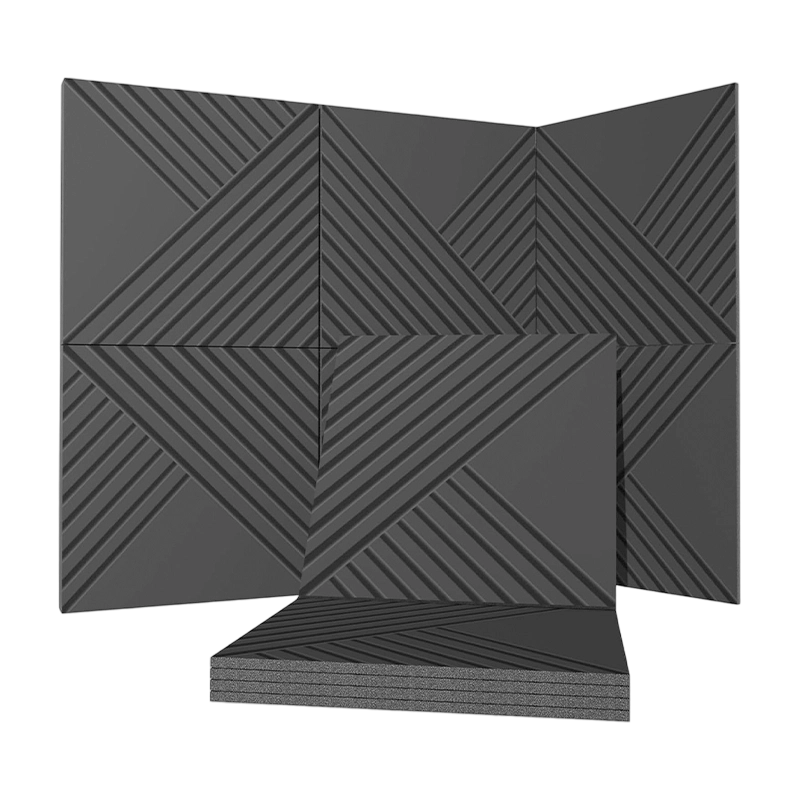
High-Density Diagonal-Groove Polyester Fiber Acoustic Panel
Grooved acoustic panels bring dimensional texture to commercial interiors while delivering measurable noise reduction. V-shaped, straight, diagonal, and arc grooves are precision-machined by CNC routing equipment directly into the panel surface, creating a play of light and shadow that elevates wall and ceiling installations.
The grooved geometry increases the effective sound-absorbing surface area compared to flat panels, enhancing NRC performance without adding bulk. The base material retains full polyester fiber acoustic properties: fire-retardant, lightweight, and free of formaldehyde.
Available in standard and custom groove patterns, panels can be manufactured to project-specific dimensions for seamless architectural integration.
Changshu Chiheng Decorative Materials Co., Ltd.
We are a professional manufacturer specializing in polyester fiber acoustic materials, dedicated to providing effective, safe, and sustainable sound control solutions for architectural and interior spaces.
With a modern production base covering 20,000 square meters, as Grooved Acoustic Panel Custom Suppliers in China, we focus on the development and manufacturing of polyester fiber acoustic panels and sound-absorbing materials, offering over 2 product series and more than 1,000 models to meet diverse project requirements worldwide.
- Factory Area
20000㎡
- Annual production capacity
1000000+
- Annual Export Ratio
90%
- Product Model
1000$

Core Production & Quality Control
Our 20,000 m² modern manufacturing facility specializes in polyester fiber acoustic panels and acoustic insulation materials. We are Grooved Acoustic Panel Manufacturers in China, Supply Custom Grooved Acoustic Panel. We use high-quality polyester fibers, ensuring purity, consistency, and long-term stability from the source. Production and testing are carried out in accordance with international standards, with close attention to acoustic performance, safety, and environmental indicators.
News
-
Two tone sound-absorbing panels combine acoustic performance with distinctive visual design, offering a way to control noise while making a deliberate...
View More -
Self-adhesive fiber acoustic panels have simplified the process of soundproofing and noise control for homeowners, renters, and businesses alike. Unli...
View More -
Polyester fiber acoustic panels have become one of the most practical solutions for controlling noise and improving sound quality in both residential ...
View More
Industry knowledge
Groove Width, Depth, and Spacing: The Three Variables That Actually Matter
A grooved acoustic panel looks simple from a distance — a flat MDF or polyester fiber board with linear slots cut into the surface — but the acoustic behavior behind those grooves is governed by three specific dimensions that most buyers never ask about: groove width, groove depth, and the spacing between grooves. Narrow, closely spaced grooves (around 3mm to 5mm wide, 8mm to 15mm apart) tend to favor higher-frequency absorption and produce a finer, more subtle surface texture that reads almost as a solid panel from a distance. Wider grooves (8mm to 15mm) spaced further apart shift absorption toward the mid-frequency range and create a more pronounced linear visual rhythm on the wall. Depth interacts with both of these — deeper grooves generally increase the total absorptive surface area exposed to the acoustic core material behind the facing layer. Changshu Chiheng manufactures grooved panels across more than a dozen groove-pattern variants within our polyester fiber panel series, precisely because architects often select the groove pattern for its visual line work first, and our technical team then adjusts the backing material and cavity depth to bring the acoustic performance up to the project's target.
Common Groove Patterns and Their Typical Use
| Groove Pattern | Visual Character | Typical Application |
| Straight linear grooves | Clean, uniform lines | Corridors, meeting rooms, office partitions |
| Wave or irregular-spacing grooves | Organic, dynamic rhythm | Feature walls, hotel lobbies, retail displays |
| Grid or cross-hatch grooves | Structured, modular look | Ceiling panels, auditorium walls |
| Deep V-groove | Strong shadow lines | Theaters, studios, high-absorption zones |
Why the Backing Layer Matters as Much as the Slots Themselves
A common misunderstanding is that the grooves alone are responsible for sound absorption. In reality, the grooved facing acts primarily as a resonant slot system, while the actual sound energy dissipation happens in the porous material behind it — typically a polyester fiber core or a fiber mat bonded to the back of the grooved board. Without an absorptive backing, a grooved panel behaves closer to a diffuser than an absorber, scattering sound rather than reducing overall reverberation. This is a critical distinction for specifiers who assume "grooved" automatically means "high absorption." At Chiheng, our grooved panel series pairs the slotted facing with a dedicated polyester fiber acoustic core sized specifically to the groove pattern in use, since a mismatch between groove opening ratio and core density can significantly underperform a project's target NRC even when the visible panel looks correct.
Practical Considerations Before Specifying Grooved Panels
- Confirm the opening ratio (the percentage of surface area occupied by grooves) rather than relying on groove width alone, since two panels with identical groove width but different spacing can have very different absorption coefficients.
- Request the acoustic test report for the complete assembly — facing plus core plus mounting method — not just the raw board, because a grooved facing tested alone will not reflect real installed performance.
- Consider groove direction relative to the room's primary sound source; horizontal groove orientation along a wall facing a stage or speaker system can slightly improve early reflection control compared to vertical orientation.
- Factor in cleaning and maintenance — narrow, deep grooves collect more dust over time than wide, shallow ones, which matters in food service, healthcare, or high-traffic public spaces.
Surface Finishing Options That Affect Both Look and Longevity
Grooved panels are finished in several ways depending on the substrate and intended environment. Wood veneer facings give a natural, high-end appearance but require UV-cured lacquer protection to resist fading and moisture in humid climates. Melamine-faced grooved panels are more scratch- and moisture-resistant, making them a common choice for schools, hospitals, and transit stations where durability matters more than a premium visual finish. Painted or laminate finishes in solid colors are typically the most cost-effective option for large-scale commercial fit-outs where a consistent brand color is required across many panels. Changshu Chiheng, operating from a 20,000-square-meter production base, maintains in-house capability across all three finishing routes, along with more than 1,000 panel models across our polyester fiber acoustic product lines, which allows project teams to match a grooved panel's finish to both the acoustic requirement and the interior design intent within a single order rather than sourcing facing and core materials from separate suppliers.
-
QUICK
Home Products About Projects News Contact -
Product Categories
Polyester Fiber Acoustic Panels Custom Acoustic Panels Self-Adhesive Acoustic Solutions Composite Sound Absorber Acoustic Accessory & Whole Solutions Grooved Acoustic Panel -
Contact
 cwl13092627852@163.com
  +86-13092627852 +8613913783502
 No. 6 Youpin North Road, Zhitang Town, Changshu City, Suzhou, Jiangsu Province, China
Let’S Co-Create A High-Quality Future For Decorative materials.
We are committed to providing you with cutting-edge design, more efficient delivery, and more stable quality solutions,Meet your material needs.
Copyright © 2026 by Changshu Chiheng Decorative Materials Co., Ltd. Rights Reserved.
