
 English
 عربى
عربى


Composite Sound Absorber Panels Manufacturers
-
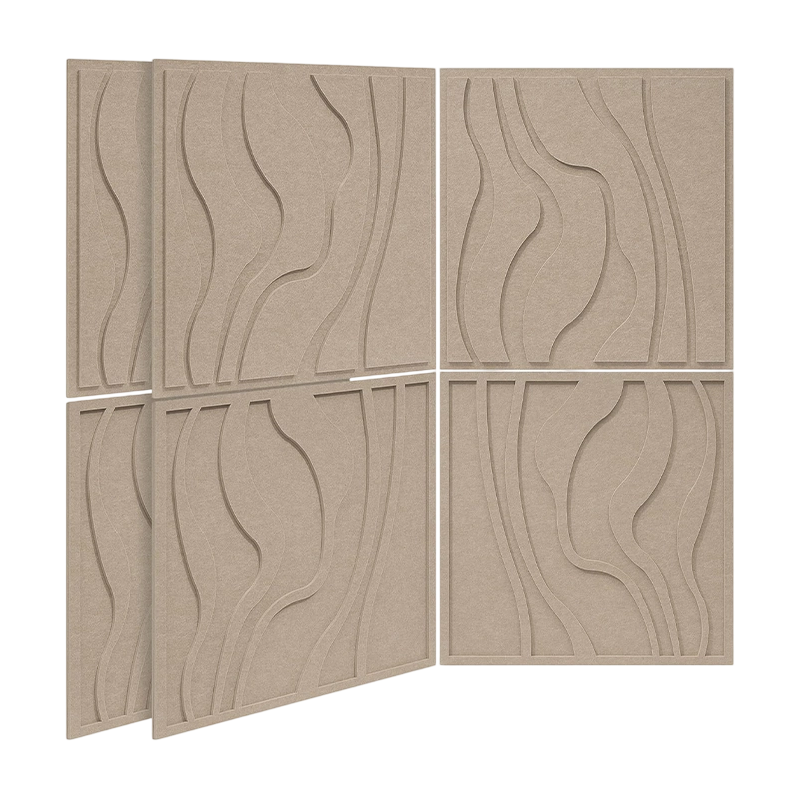

Laminated Composite Acoustic Panel
-
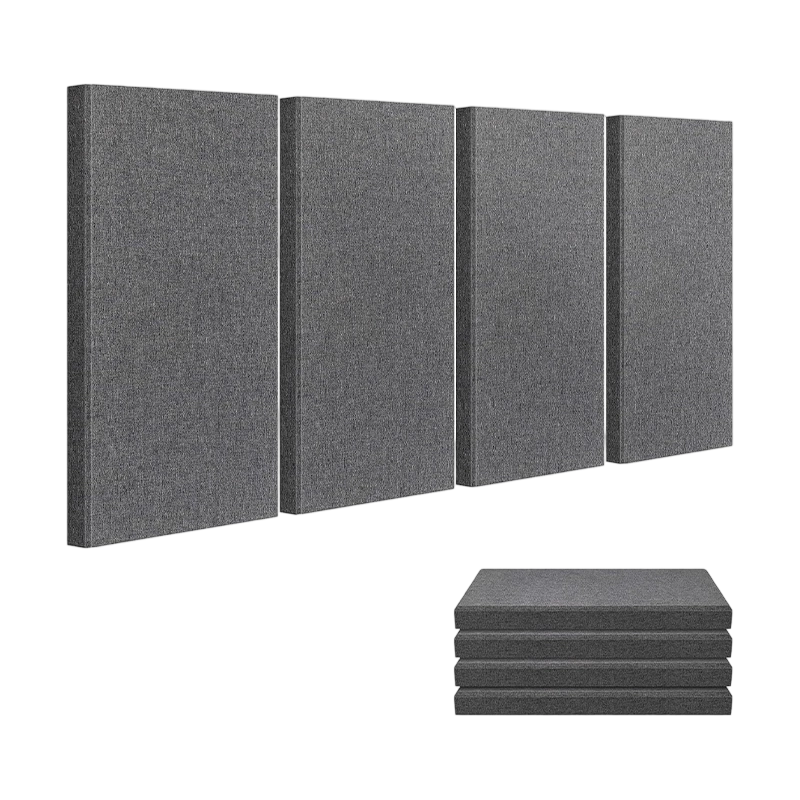
Laminated Decorative Acoustic Panel
-
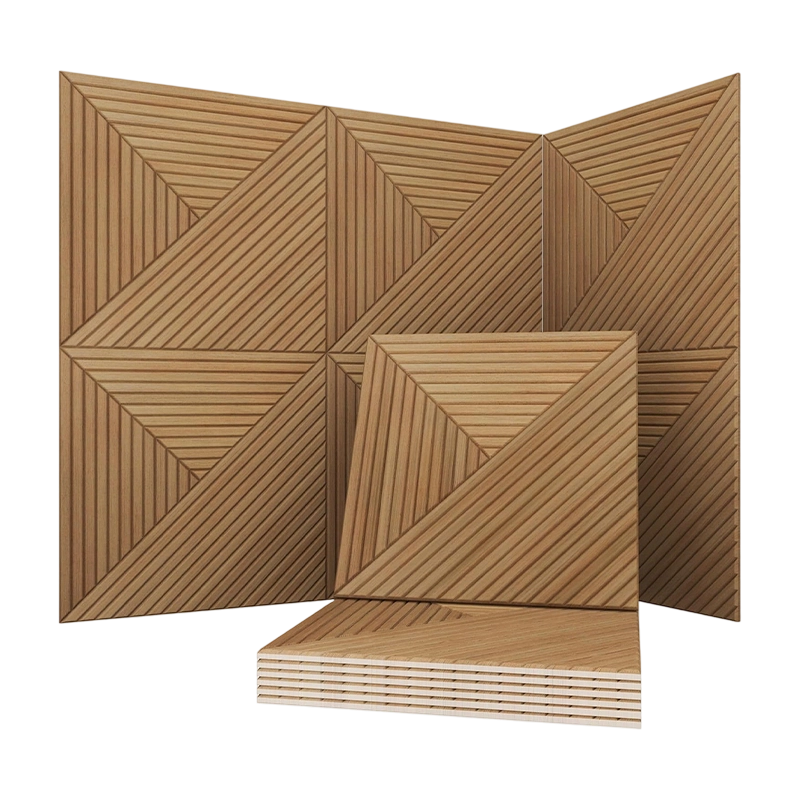
Composite Acoustic Panel
-
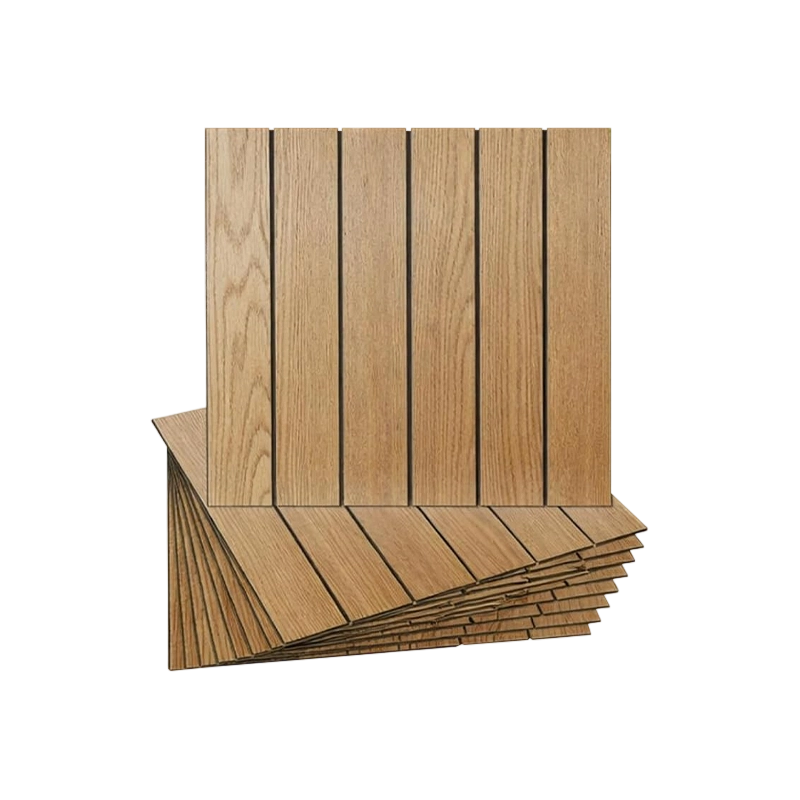
PVC Laminated Soundproof Panel
-
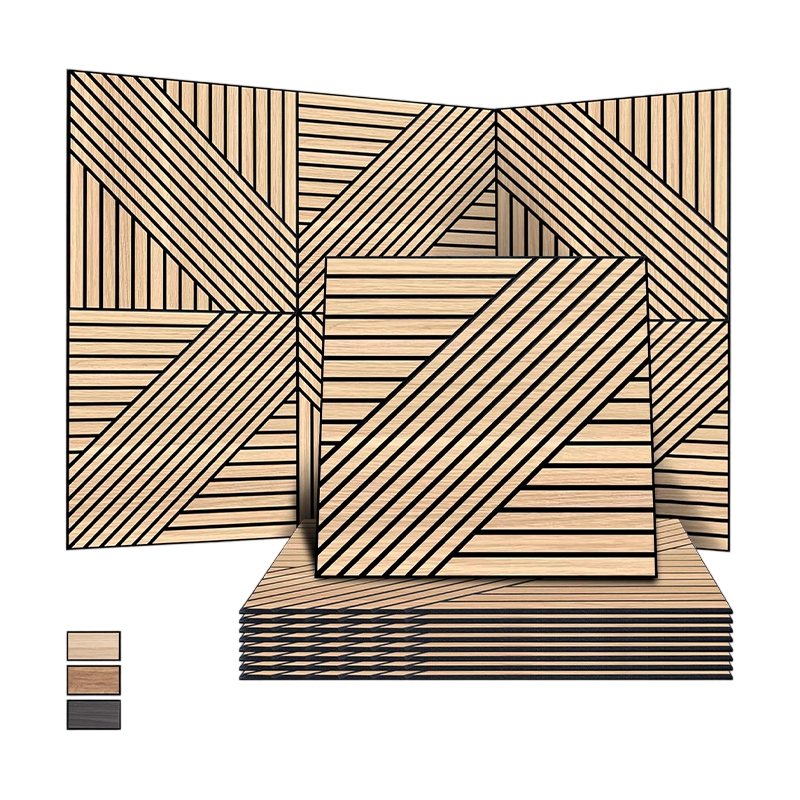
Reinforced PVC Acoustic Barrier Panel
-
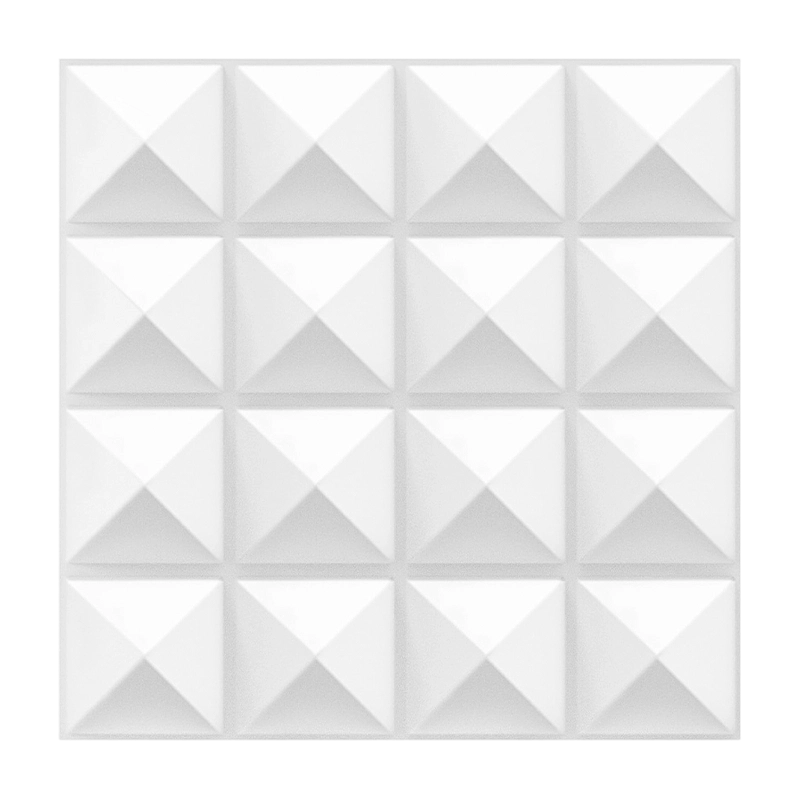
3D Embossed Acoustic Panel
-

3D Geometric Acoustic Panel
-
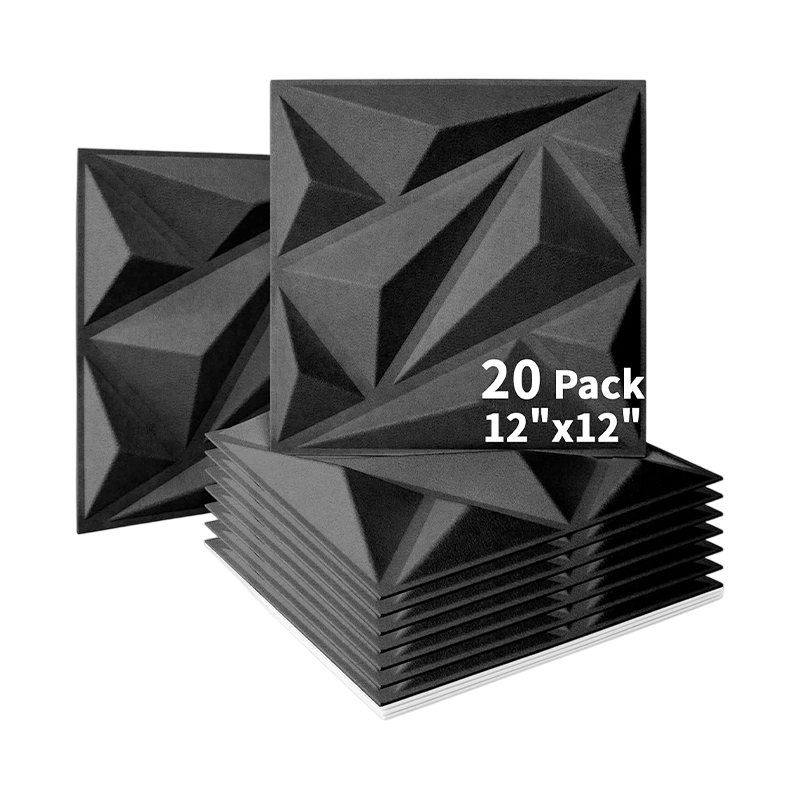
3D Laminated Acoustic Wall Panel
Composite acoustic panels go beyond single-material construction by combining polyester fiber with PVC decorative laminates, high-density mold-pressed forms, or other functional substrates. The result is a product that addresses acoustic, structural, and aesthetic requirements within a single panel system.
The line covers PVC wood-grain surface composites for moisture-resistant decorative installations, 3D mold-pressed panels for sculptural wall treatments, and multi-material laminated boards for applications where additional structural stiffness is required alongside sound absorption.
All composite panels are manufactured under controlled quality conditions and are available for OEM production. Panel dimensions, surface finishes, and composite constructions can be adapted to project specifications.
We are a professional manufacturer specializing in polyester fiber acoustic materials, dedicated to providing effective, safe, and sustainable sound control solutions for architectural and interior spaces.
With a modern production base covering 20,000 square meters, as Composite Sound Absorber Boards Factory in China, we focus on the development and manufacturing of polyester fiber acoustic panels and sound-absorbing materials, offering over 2 product series and more than 1,000 models to meet diverse project requirements worldwide.
- Factory Area
20000㎡
- Annual production capacity
1000000+
- Annual Export Ratio
90%
- Product Model
1000$

Our 20,000 m² modern manufacturing facility specializes in polyester fiber acoustic panels and acoustic insulation materials. We are Composite Sound Absorber Panels Manufacturers in China, Supply Composite Sound Absorber Panels. We use high-quality polyester fibers, ensuring purity, consistency, and long-term stability from the source. Production and testing are carried out in accordance with international standards, with close attention to acoustic performance, safety, and environmental indicators.
-
Two tone sound-absorbing panels combine acoustic performance with distinctive visual design, offering a way to control noise while making a deliberate...
View More -
Self-adhesive fiber acoustic panels have simplified the process of soundproofing and noise control for homeowners, renters, and businesses alike. Unli...
View More -
Polyester fiber acoustic panels have become one of the most practical solutions for controlling noise and improving sound quality in both residential ...
View More
Industry knowledge
Why Layering Different Materials Outperforms a Single-Material Panel
A composite sound absorber panel combines two or more distinct material layers — most commonly a porous absorptive core such as polyester fiber paired with a rigid facing, a perforated surface layer, or an air-gap membrane — specifically because no single material handles the full acoustic frequency spectrum equally well on its own. Porous absorbers like polyester fiber are highly effective at dissipating mid and high-frequency energy as sound waves pass through the fiber matrix, but they are comparatively weak against low-frequency energy unless built to impractical thicknesses. Rigid or semi-rigid backing layers, by contrast, can be tuned as resonant systems that specifically target the low-frequency range a porous layer alone struggles with. By combining these mechanisms into a single manufactured assembly, a composite panel can address a broader frequency range within a practical overall thickness than either material could achieve independently, which is the core engineering reason composite construction has become the standard approach for demanding acoustic environments rather than a marketing distinction.
Common Layer Combinations and What Each Targets
| Layer Combination | Primary Mechanism | Frequency Focus |
| Fiber core + perforated facing | Porous absorption through perforation openings | Mid to high frequency |
| Fiber core + air gap + rigid back panel | Resonant cavity effect | Low to mid frequency |
| Fiber core + membrane facing | Membrane resonance | Targeted low frequency |
| Dual-density fiber layers | Graduated porosity | Broad, balanced spectrum |
Reading an Absorption Curve to Know What a Composite Panel Is Actually Solving
One of the more useful skills for anyone specifying acoustic treatment is learning to read an absorption coefficient curve rather than relying solely on a single averaged NRC number. The NRC is a simple average across four mid-range frequency bands, and while it is convenient for quick comparison, it hides how a panel performs at the frequency extremes — which is often exactly where a project's actual noise problem lives. A composite panel engineered with a resonant back cavity might show a pronounced absorption peak around 125Hz to 250Hz that a standard flat fiber panel simply cannot reach, even if both panels report a similar overall NRC on paper. This matters significantly for spaces like mechanical rooms, home theaters, or gymnasiums where the dominant noise is low-frequency rumble or footstep impact rather than the speech-range frequencies that most flat acoustic panels are optimized for. Requesting the full 1/3-octave band absorption data, rather than a single NRC figure, is the more reliable way to confirm that a composite panel actually addresses the specific frequency problem identified in a room's acoustic assessment.
Questions Worth Asking When Comparing Composite Panel Options
- Can the supplier provide full-octave-band absorption data rather than a single NRC average, particularly for projects with a known low-frequency issue?
- Is the composite construction tested as a complete assembly, or is the reported performance extrapolated from testing each layer separately?
- Does the panel's total thickness and weight fit the structural capacity of the mounting surface, since composite panels are generally heavier than single-layer fiber panels of comparable size?
- What air gap, if any, is required behind the panel to achieve the tested performance, since resonant composite systems often depend on a specific cavity depth that a flush-mounted installation would not provide?
Weight and Structural Load: The Trade-Off Composite Construction Introduces
The broader frequency coverage a composite panel offers comes with a practical trade-off that is easy to overlook during the design phase but becomes very relevant during installation planning — composite panels are heavier and typically more rigid than a single-material fiber board of the same surface dimensions, because they carry the added mass of a rigid backing, membrane, or secondary facing layer. This has direct implications for mounting hardware selection, wall or ceiling structural capacity, and even how many installers are needed to safely lift and position larger panel sizes. A ceiling installation using composite panels, for example, may require verification that the existing structural grid or suspension system is rated for the added weight, which is not typically a concern with lightweight single-layer fiber panels of the same size. Project teams sometimes discover this constraint late in the process, after a composite panel has already been selected for its superior low-frequency performance, requiring a return to the structural engineer for load capacity confirmation that could have been addressed earlier if weight had been factored into the initial product comparison.
Changshu Chiheng Composite Sound Absorber Panels are engineered with this trade-off in mind, offering multiple core-to-facing weight configurations across our product range so that project teams can select a composite construction suited to their specific structural constraints rather than defaulting to the heaviest, most acoustically aggressive option available. Produced from a 20,000-square-meter production base with more than 1,000 models spanning our polyester fiber acoustic product lines, Changshu Chiheng Decorative Materials Co., Ltd. provides full assembly test data alongside weight and mounting specifications for our composite panel series, which allows architects and acoustic consultants to confirm both the frequency performance and the structural feasibility of a composite solution before finalizing a project specification.
-
QUICK
Home Products About Projects News Contact -
Product Categories
Polyester Fiber Acoustic Panels Custom Acoustic Panels Self-Adhesive Acoustic Solutions Composite Sound Absorber Acoustic Accessory & Whole Solutions Composite Sound Absorber Panels -
Contact
 cwl13092627852@163.com
  +86-13092627852 +8613913783502
 No. 6 Youpin North Road, Zhitang Town, Changshu City, Suzhou, Jiangsu Province, China
Let’S Co-Create A High-Quality Future For Decorative materials.
We are committed to providing you with cutting-edge design, more efficient delivery, and more stable quality solutions,Meet your material needs.
