
 English
 عربى
عربى
Custom Printed Acoustic Panels


Custom Printed Acoustic Panels Solution


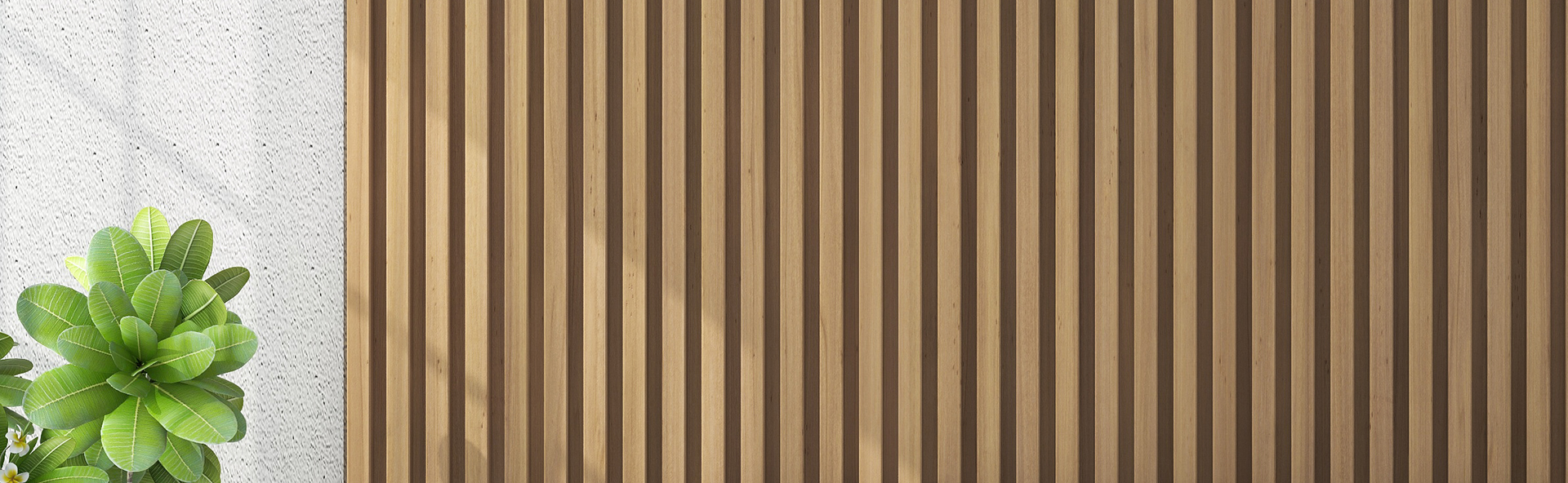
Wood slat composite acoustic panels combine the warmth of real timber with the acoustic performance of a high-density polyester fiber backing. Solid wood slats are spaced at regular intervals across the panel surface, creating a three-dimensional layered aesthetic favored in premium hospitality, residential, and corporate interiors.
The polyester fiber substrate provides the primary sound absorption function while the wood slat arrangement scatters mid-to-high frequency reflections, resulting in a natural-sounding acoustic environment. The panel system accommodates both wall mounting and ceiling suspension.
Wood species, slat spacing, and panel dimensions can be specified to project requirements, with OEM manufacturing support available.
Changshu Chiheng Decorative Materials Co., Ltd.
We are a professional manufacturer specializing in polyester fiber acoustic materials, dedicated to providing effective, safe, and sustainable sound control solutions for architectural and interior spaces.
With a modern production base covering 20,000 square meters, as Custom Printed Acoustic Panels Solution in China, we focus on the development and manufacturing of polyester fiber acoustic panels and sound-absorbing materials, offering over 2 product series and more than 1,000 models to meet diverse project requirements worldwide.
- Factory Area
20000㎡
- Annual production capacity
1000000+
- Annual Export Ratio
90%
- Product Model
1000$

Core Production & Quality Control
Our 20,000 m² modern manufacturing facility specializes in polyester fiber acoustic panels and acoustic insulation materials. We are Custom Printed Acoustic Panels Solution in China, Supply Custom Printed Acoustic Panels Solution. We use high-quality polyester fibers, ensuring purity, consistency, and long-term stability from the source. Production and testing are carried out in accordance with international standards, with close attention to acoustic performance, safety, and environmental indicators.
News
-
Two tone sound-absorbing panels combine acoustic performance with distinctive visual design, offering a way to control noise while making a deliberate...
View More -
Self-adhesive fiber acoustic panels have simplified the process of soundproofing and noise control for homeowners, renters, and businesses alike. Unli...
View More -
Polyester fiber acoustic panels have become one of the most practical solutions for controlling noise and improving sound quality in both residential ...
View More
Industry knowledge
Does Printing on an Acoustic Panel Reduce Its Absorption Performance?
This is one of the most common technical concerns raised by architects considering printed acoustic panels for a branded interior or a photo-realistic feature wall, and the honest answer is that it depends entirely on the printing method and ink coverage rather than being a fixed yes or no. Direct UV printing onto the fiber surface, when done with a properly calibrated ink density, penetrates only the outermost layer of the polyester fiber and generally reduces the NRC by a marginal amount, often under 0.05 across the tested frequency range. Heavy, saturated full-bleed graphics with dense color layering can seal more of the surface fiber structure and produce a more noticeable drop, particularly in the higher frequency bands where surface porosity matters most. This is why Changshu Chiheng tests printed samples separately from the base material rather than assuming the published NRC of the unprinted panel automatically carries over, and why any project specifying full-coverage artwork should request the tested performance of the actual printed sample rather than relying on the blank panel's data sheet.
Printing Methods Compared
| Printing Method | Impact on Absorption | Typical Use |
| Direct UV print | Minimal, surface-level only | Logos, light patterns, line art |
| Dye sublimation on fabric facing | Negligible if facing is acoustically transparent | Full-color photography, gradients |
| Laminated printed film | Moderate to significant if film is non-porous | High-durability signage, wet-area applications |
Stretched Fabric Facing: A Better Route for Full-Color Artwork
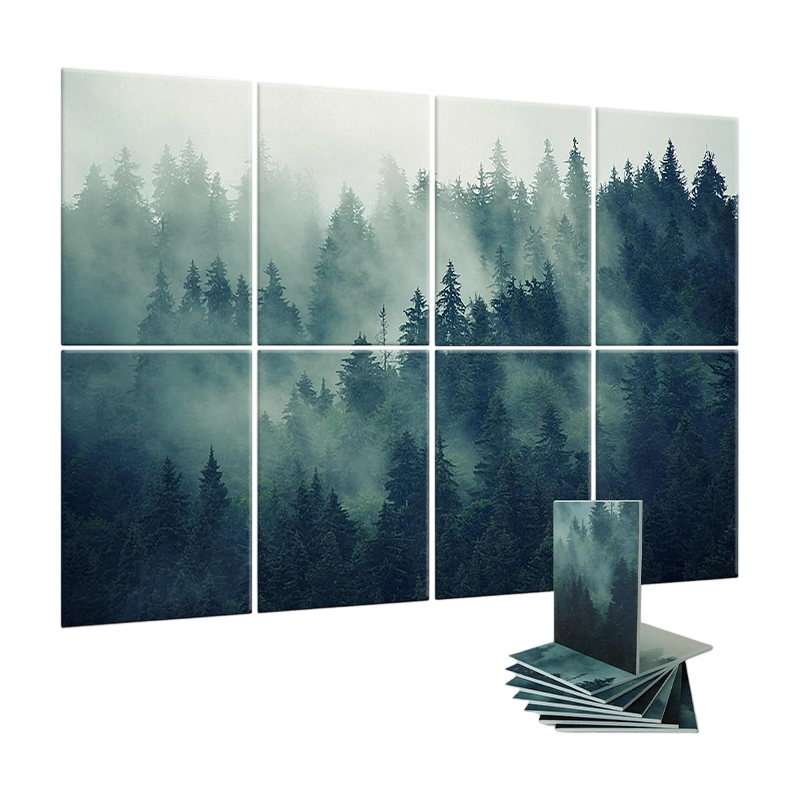
For projects that require large-format photography, dense gradients, or full-bleed artwork covering an entire panel, printing directly onto the fiber board is often not the ideal approach compared to printing onto an acoustically transparent fabric that is then stretched over a separate polyester fiber core. This method keeps the printing process and the acoustic core as two independently optimized components — the fabric can carry a high-resolution, richly saturated image without any concern for how ink density affects fiber porosity, because the actual sound absorption happens in the core material behind it, not in the printed layer itself. The fabric itself needs to be selected carefully, since not all printable textiles are acoustically transparent; a tightly woven fabric with a high thread count can block higher frequencies even if it looks visually similar to a more open-weave option. Changshu Chiheng Printed Acoustic Panels produced through this stretched-fabric method are built specifically around fabrics tested for acoustic transparency before they are approved for the print production line, which avoids the situation where an attractive printed sample later underperforms once installed at full scale.
Questions to Ask Before Approving a Print-Ready File
- Confirm the color profile and resolution requirements in advance, since a file optimized for screen display often needs conversion to CMYK and a higher DPI before large-format printing.
- Ask whether the panel edges will show any color shift once mounted, particularly on beveled or radius-edge panels where the print may not wrap fully to the edge.
- Request a physical color proof rather than approving from a digital rendering, since fiber and fabric substrates absorb ink differently than paper or screen and can shift color saturation.
- Clarify UV resistance and fade rating if the panel will be installed near windows or under strong artificial lighting for extended periods.
Practical Applications Where Printed Panels Solve More Than a Design Problem
Printed acoustic panels are frequently discussed purely as a design or branding tool, but there are several functional applications worth noting. In open-plan schools and libraries, printed panels featuring maps, wayfinding graphics, or educational imagery combine acoustic treatment with signage, reducing the number of separate surface treatments needed in a room. In healthcare waiting areas, printed nature scenes or calming imagery on acoustic panels serve a documented role in reducing perceived stress while simultaneously lowering reverberation time, addressing two design goals with a single installed product. In corporate offices, printed panels are often used to display company values, wayfinding, or brand patterns across meeting rooms and reception areas, replacing what would otherwise require separate acoustic treatment plus separate signage or wall graphics. This dual-purpose function is part of why demand for Printed Acoustic Panels has grown steadily among project teams looking to reduce the total number of finish materials specified in a space without compromising on either acoustic performance or visual identity.
Changshu Chiheng Decorative Materials Co., Ltd. supports printed panel projects from a 20,000-square-meter production base, offering more than 1,000 models across our polyester fiber acoustic product lines, which allows printed graphics to be paired with the appropriate core density, thickness, and edge profile for each specific application rather than treating the printed surface as an afterthought layered onto a generic panel. For architects and designers evaluating printed panel suppliers, the most useful screening question is not what the artwork will look like, but what tested acoustic data exists for the printed assembly as installed — core, facing, and print layer together — since that combined performance is what will actually be measured once the space is occupied and in use.
-
QUICK
Home Products About Projects News Contact -
Product Categories
Polyester Fiber Acoustic Panels Custom Acoustic Panels Self-Adhesive Acoustic Solutions Composite Sound Absorber Acoustic Accessory & Whole Solutions Custom Printed Acoustic Panels Solution -
Contact
 cwl13092627852@163.com
  +86-13092627852 +8613913783502
 No. 6 Youpin North Road, Zhitang Town, Changshu City, Suzhou, Jiangsu Province, China
Let’S Co-Create A High-Quality Future For Decorative materials.
We are committed to providing you with cutting-edge design, more efficient delivery, and more stable quality solutions,Meet your material needs.
Copyright © 2026 by Changshu Chiheng Decorative Materials Co., Ltd. Rights Reserved.
