
 English
 عربى
عربى
Wholesale Wood Slat Composite Acoustic Panel


Wood Slat Composite Acoustic Panel Manufacturers
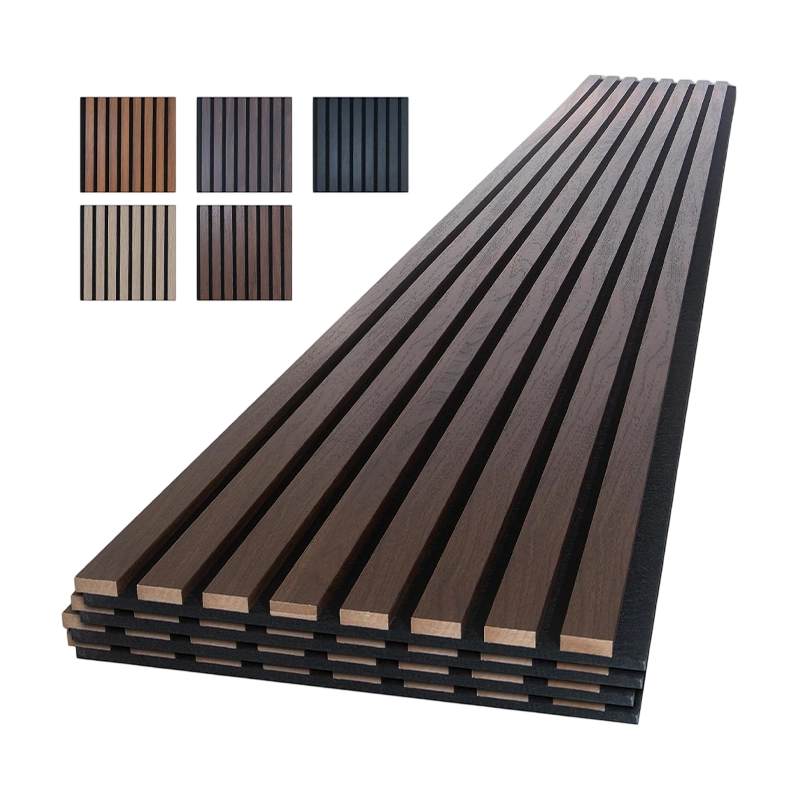

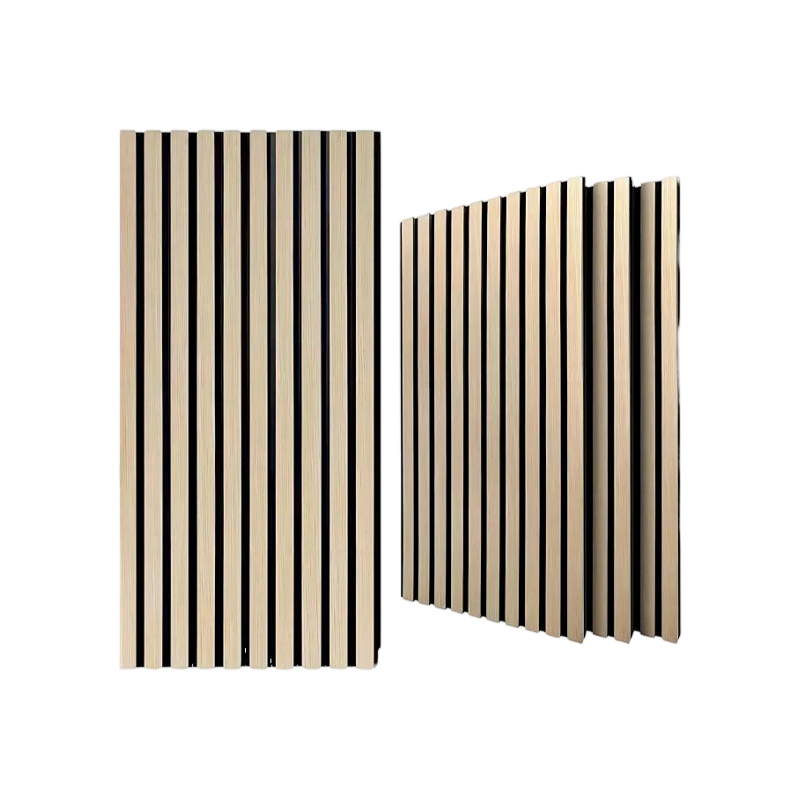
Two-tone acoustic panels achieve a sophisticated dual-color contrast effect through a CNC grooving process applied to a felt-composite substrate. The precision machining reveals the contrasting base layer beneath the surface material, creating clean geometric color transitions that read as a designed surface rather than applied decoration.
The felt-composite construction delivers effective sound absorption while the grooved structure adds diffusion characteristics, contributing to both acoustic control and visual depth. The result is a premium wall treatment suited to high-end hospitality, executive environments, and design-led commercial interiors.
Color combinations, groove patterns, and panel dimensions can be specified for project and OEM orders.
Changshu Chiheng Decorative Materials Co., Ltd.
We are a professional manufacturer specializing in polyester fiber acoustic materials, dedicated to providing effective, safe, and sustainable sound control solutions for architectural and interior spaces.
With a modern production base covering 20,000 square meters, as Wood Slat Composite Acoustic Panel Suppliers in China, we focus on the development and manufacturing of polyester fiber acoustic panels and sound-absorbing materials, offering over 2 product series and more than 1,000 models to meet diverse project requirements worldwide.
- Factory Area
20000㎡
- Annual production capacity
1000000+
- Annual Export Ratio
90%
- Product Model
1000$

Core Production & Quality Control
Our 20,000 m² modern manufacturing facility specializes in polyester fiber acoustic panels and acoustic insulation materials. We are Wood Slat Composite Acoustic Panel Manufacturers in China, Supply Wood Slat Composite Acoustic Panel Wholesale. We use high-quality polyester fibers, ensuring purity, consistency, and long-term stability from the source. Production and testing are carried out in accordance with international standards, with close attention to acoustic performance, safety, and environmental indicators.
News
-
Two tone sound-absorbing panels combine acoustic performance with distinctive visual design, offering a way to control noise while making a deliberate...
View More -
Self-adhesive fiber acoustic panels have simplified the process of soundproofing and noise control for homeowners, renters, and businesses alike. Unli...
View More -
Polyester fiber acoustic panels have become one of the most practical solutions for controlling noise and improving sound quality in both residential ...
View More
Industry knowledge
Understanding the Two-Layer System Behind Wood Slat Composite Panels
A wood slat composite acoustic panel is, in almost every case, a two-part system rather than a single material, and understanding how the two parts divide the acoustic and visual workload is essential for specifying it correctly. The visible layer consists of real wood veneer or engineered wood slats, typically spaced with consistent gaps between them, mounted onto a backing substrate. The wood itself contributes very little to sound absorption — solid wood is acoustically reflective by nature — so the actual absorption happens in the polyester fiber acoustic layer sandwiched or mounted directly behind the slats. This means the gap ratio between the wood slats, meaning the percentage of open space versus solid wood coverage across the panel face, is the single most influential factor determining how much of the fiber layer's absorptive potential is actually accessible to sound waves in the room. A panel with wide slats and narrow gaps will look more solid and wood-forward but will absorb noticeably less than a panel with the same fiber backing and a more open slat pattern, even though both might be marketed under the same product name.
Slat Gap Ratio and Its Effect on Absorption
| Open Area Ratio | Visual Effect | Relative Absorption |
| 15% - 20% | Solid, wood-dominant appearance | Lower |
| 25% - 35% | Balanced slat-and-gap rhythm | Moderate |
| 40%+ | Open, screen-like appearance | Higher |
Real Wood Veneer Versus Wood-Look Alternatives
Buyers specifying wood slat panels have three broad facing options, and each carries different cost, maintenance, and environmental trade-offs worth understanding before committing to a large order. Real wood veneer, typically walnut, oak, or ash sliced thin and bonded to an MDF or fiberboard slat core, offers the most authentic grain pattern and tactile quality but requires UV-cured lacquer to resist fading and is more sensitive to humidity fluctuations than engineered alternatives. Melamine-faced wood-look slats replicate the appearance of wood grain through a printed and textured surface layer, offering significantly better scratch resistance and color consistency across large orders, since they are not subject to the natural variation found in real wood veneer batches. PVC or WPC (wood-plastic composite) slats are a third option, most often chosen for high-moisture or outdoor-adjacent applications such as covered walkways or pool-area interiors, where real wood veneer would be a poor long-term choice regardless of lacquer treatment. Changshu Chiheng Wood Slat Composite Acoustic Panel products are available across all three facing types, which allows the same acoustic core and slat spacing to be specified consistently across a project even when different rooms call for different surface materials due to humidity or budget constraints.
Questions to Clarify Before Selecting a Facing Material
- What is the expected humidity range in the installation environment, since real wood veneer performs differently in a dry office versus a naturally ventilated lobby.
- Is exact color matching across a large panel run required, in which case melamine or engineered facings offer more predictable consistency than natural veneer batches.
- Will the panels be installed near a heat source or direct sunlight, which affects both fading risk and the need for UV-stable lacquer coatings.
- Does the project require a fire rating that the chosen facing material and adhesive system can actually achieve, since not all veneer and lacquer combinations meet the same fire class as the fiber core behind them.
Installation Sequencing That Prevents Common Site Problems
Wood slat composite panels are more sensitive to installation sequencing than flat fabric-wrapped or flat printed panels, mainly because visible grain direction, slat alignment, and butt-joint placement between panels are immediately obvious to the eye if handled inconsistently. On large wall or ceiling runs, it is important to plan the panel layout so that slat direction remains continuous across adjacent panels rather than alternating, since even a small misalignment at a panel-to-panel joint becomes a visible break in the linear pattern. Site teams should also be advised to acclimate wood-faced panels to the room's ambient humidity for at least 24 to 48 hours before final mounting, particularly in real veneer products, to reduce the risk of slight expansion or contraction after installation that could open gaps at the joints. Because the acoustic core sits behind the slats rather than being visible, damage to the fiber backing during handling is easy to miss until the finished wall is measured acoustically and underperforms expectations, so a visual inspection of the backing layer before mounting is a worthwhile step that is often skipped on tight installation schedules.
Where Wood Slat Panels Are Chosen Over Fabric or Printed Alternatives
Wood slat composite panels tend to be specified in projects where warmth and material authenticity are central to the interior concept, such as boutique hotel lobbies, executive boardrooms, high-end residential media rooms, and hospitality dining areas where a fabric-wrapped or printed panel would not match the surrounding material palette of natural stone, leather, and timber flooring. They are less commonly chosen for high-humidity commercial kitchens, healthcare environments requiring frequent surface disinfection, or budget-driven office fit-outs where a flat fabric panel achieves similar acoustic results at a lower material and installation cost. Changshu Chiheng Decorative Materials Co., Ltd. produces our wood slat composite line from a 20,000-square-meter production base, with more than 1,000 models available across our broader polyester fiber acoustic product range, allowing project teams to pair a specific slat width, gap ratio, and facing material with the exact NRC target required for a room, rather than selecting a wood slat panel purely for its appearance and discovering after installation that the acoustic result falls short of the project's reverberation targets.
-
QUICK
Home Products About Projects News Contact -
Product Categories
Polyester Fiber Acoustic Panels Custom Acoustic Panels Self-Adhesive Acoustic Solutions Composite Sound Absorber Acoustic Accessory & Whole Solutions Wood Slat Composite Acoustic Panel -
Contact
 cwl13092627852@163.com
  +86-13092627852 +8613913783502
 No. 6 Youpin North Road, Zhitang Town, Changshu City, Suzhou, Jiangsu Province, China
Let’S Co-Create A High-Quality Future For Decorative materials.
We are committed to providing you with cutting-edge design, more efficient delivery, and more stable quality solutions,Meet your material needs.
Copyright © 2026 by Changshu Chiheng Decorative Materials Co., Ltd. Rights Reserved.
